The Specific GMB Tools Chicago Agencies Use to Fix Broken Map Clicks
In the high-stakes arena of Chicago local search, there is a phenomenon that haunts even the most seasoned marketing directors: “Ghost Clicks.” You see the impressions climbing in your performance dashboard. You see your pin sitting comfortably in the top three of the local pack for high-value keywords like “personal injury lawyer Chicago” or “HVAC repair near me.” Yet, the phone remains silent. The expected surge in lead volume has flatlined. This is the definition of “broken map clicks” – a disconnect between visibility and conversion that indicates a fundamental flaw in your google business profile seo strategy.
As an expert in technical SEO and GBP management at Division-D, I’ve audited thousands of profiles where the data simply doesn’t add up. In a market as hyper-competitive as Chicago – spanning from the high-density corridors of the Loop to the sprawling residential blocks of Naperville – ranking is no longer the finish line; it is merely the entry fee. To dominate the 2026 landscape, agencies are moving beyond basic optimization and utilizing a sophisticated arsenal of local seo tools to diagnose why users are seeing your listing but choosing your competitor instead. If your map clicks are broken, it’s time to stop guessing and start measuring with the precision of a Chicago structural engineer.
Why Chicago Businesses Fail to Convert Map Impressions into Calls
The first hurdle many Chicago business owners face is the “Proximity Trap.” In a city defined by its neighborhoods – Wicker Park, Logan Square, Lincoln Park – Google’s algorithm is incredibly sensitive to “Distance Decay.” This means that as a user moves even a few blocks away from your physical location, your relevance score drops precipitously. However, the problem isn’t just appearing on the map; it’s appearing for the wrong intent. Many businesses suffer from high impressions because they rank for broad terms that don’t lead to conversions, while they remain invisible for high-intent, “near me” queries.
Furthermore, Chicago’s unique geography creates “dead zones” where search results are often cached or skewed by high-rise interference and mobile network handoffs. This leads to a data reporting lag. You might see a “click” in your GMB dashboard that was actually a user accidentally tapping your listing while scrolling, or a “comparison shopper” who clicks three different listings but only calls the one with the most recent high-quality photo. To understand this, you must Stop Letting the Chicago Proximity Trap Kill Your Map Leads. Without understanding the nuance of search intent mismatch, you are essentially paying for “vanity metrics” that do nothing for your bottom line.
The Professional Toolset: Grid Trackers vs. Optimization Suites
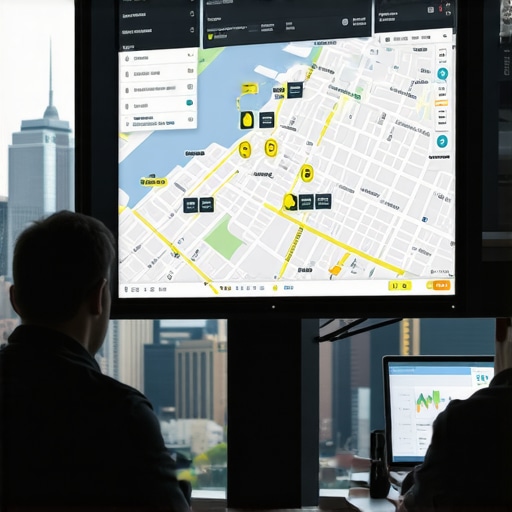
When Chicago agencies look to rank google business profile listings, they don’t rely on the standard Google Business Profile manager. That’s like trying to win the Chicago Marathon in flip-flops. Agencies use specialized GBP ranking tools to visualize the search landscape. Common tools like Local Falcon, BrightLocal, and Local Viking are the industry standards for grid tracking. They provide a bird’s-eye view of how your ranking changes block-by-block across the city.
However, the strategic pivot in 2026 is toward automation and deep-data integration. While Reddit threads often suggest SEMrush Local for beginners, professional Chicago agencies require more granular data provided by platforms like Places Scout or Local Dominator. These tools allow us to see exactly how a competitor in River North is outperforming a business in the Gold Coast despite having fewer reviews.
For those looking for a true “Megalodon” in the space, SEO Viper Tools has emerged as a premier google maps ranking booster. It doesn’t just track rankings; it helps identify the interaction gaps that cause clicks to break. While tools like Whitespark are excellent for citation building, the modern agency needs an optimization suite that can handle the sheer volume of data generated in a Tier-1 market like Chicago. A google maps rank tracker is only useful if it tells you why you dropped from position #1 to #4 when a new competitor opened up three blocks away.
Fixing the “Broken Click” with Technical GBP Audits
If your ranking is high but your conversion is low, the issue is likely technical. This is where a google business profile audit tool becomes indispensable. Agencies use these tools to hunt for NAP (Name, Address, Phone) inconsistencies that might be confusing Google’s “Trust Graph.” Even a slight variation – like “St.” vs “Street” or “Suite 500” vs “#500” – can dilute your local authority in the eyes of the algorithm.
More importantly, these audits uncover “Verification Hell” and “Shadowbanning.” In Chicago, where competition is fierce, it’s not uncommon for competitors to suggest “edits” to your listing, such as marking you as “permanently closed” or changing your phone number. If you aren’t using local seo software to monitor these changes in real-time, you could be losing thousands of dollars in leads every day. You might even find that your listing has been filtered out of the results entirely due to a “shadowban” caused by over-optimization or suspicious review patterns. If you suspect your visibility is compromised, check for these 4 Signs Your Chicago Map Pin is Shadowbanned [2026 Fixes].
A professional google business profile optimization audit will also look at your “Category Nesting.” Are you listed as just a “Restaurant,” or have you properly utilized secondary categories like “Italian Restaurant,” “Catering Service,” and “Pizza Delivery”? Using tools to analyze the category combinations of the top 3 winners in your specific Chicago zip code is the fastest way to fix a broken click path.
Advanced Interaction Signals: The Secret to 2026 Rankings
The 2026 algorithm has shifted heavily away from static signals like “keywords in the business name” and toward “Interaction Metrics.” Google wants to see that users aren’t just clicking your listing, but engaging with it. This includes clicks to call, requests for directions, and – most importantly – time spent viewing photos. If a user clicks your listing and immediately bounces back to the search results, Google interprets this as a “broken click” and will eventually demote your google business ranking.
One of the most effective ways to boost these signals is through “First-Person” review tricks. This involves encouraging customers to upload photos with their reviews and mention specific services or locations. For a Chicago business, having a review that says, “The best deep dish near the United Center,” is worth ten generic “Great service” reviews. These reviews trigger Google’s Vision AI to associate your business with specific geographic landmarks and search terms. You can learn more about how to implement The ‘First-Person’ review trick that actually sticks on Chicago map pins to ensure your reviews are actually moving the needle.
Additionally, photo signals are often overlooked. Chicago agencies use gmb seo tools to Geotag images (though Google officially strips EXIF data, the visual AI still recognizes Chicago landmarks like the Willis Tower or the Bean in the background). High-resolution, authentic photos of your team working in recognizable Chicago neighborhoods provide a “trust signal” that generic stock photos can never replicate. This increases the CTR (Click-Through Rate) and tells Google that your business is a legitimate, active part of the local community.
Scaling Chicago Local SEO for Service Area Businesses (SABs)
Service Area Businesses – plumbers, roofers, locksmiths, and HVAC contractors – face a unique set of challenges in the Chicago market. How do you rank higher on google maps in Naperville, Evanston, and Aurora when your physical office is in Des Plaines? This is where the “Map Radius” becomes a battleground. Without a physical storefront, you are at the mercy of Google’s “Service Area” settings, which are notoriously finicky.
To scale an SAB, agencies use local seo software to manage multiple “hidden” service areas and optimize for “local justification” snippets. These are the small bits of text Google pulls from your reviews or website that say, “Their website mentions ’emergency plumbing in Evanston’.” By aligning your website’s landing pages with your GBP’s service areas, you create a cohesive signal that helps you rank in google map pack results across a much wider geographic footprint.
The goal for an SAB is to achieve “Top 3” status in as many suburban clusters as possible. This requires a gmb ranking service that understands the interplay between organic SEO and map rankings. You cannot simply set a 20-mile radius and expect to win; you must strategically build out local content for each major suburb. For a deep dive into this strategy, see how to Master Google Maps Optimization in Chicago for Local Success.
Conclusion: Future-Proofing Your Map Presence
As we move further into 2026, the integration of AI Overviews (SGE) into local search will only increase the importance of having a clean, data-rich Google Business Profile. Google’s AI will increasingly rely on the “Interaction Metrics” and “Trust Signals” we’ve discussed to decide which three businesses deserve the spotlight. If your map clicks are broken today, they will be non-existent tomorrow as AI begins to answer user queries directly within the search interface.
Dominating the Chicago map pack requires a combination of elite local seo tools, technical precision, and a deep understanding of neighborhood-level search behavior. Whether you are a solo practitioner in Lincoln Square or a multi-location enterprise across the Chicagoland area, the tools you choose will define your trajectory. Don’t settle for “Ghost Clicks.” Use a professional google maps ranking service or a robust google business profile seo suite to ensure that every click turns into a conversation. The future of local search is behavioral, and in a city as competitive as Chicago, only the most data-driven businesses will survive the shift.