
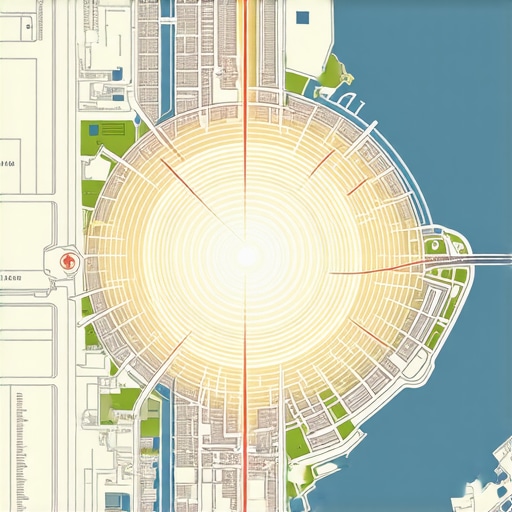
The Weird Content Trick That Fixes Chicago Service Area Radius Problems
As a Chicago business owner, you’ve likely felt the sting of the “Proximity Trap.” You operate a thriving service area business (SAB) out of Aurora, yet your phone remains silent for high-ticket jobs in Naperville. Or perhaps your plumbing van is parked in Wicker Park, but your business is digitally invisible to homeowners just a few blocks away in Logan Square. In the competitive landscape of 2026, google business profile seo has evolved into a game of inches, where Google’s proximity filters act as invisible walls, confining your reach to a tiny radius around your verified address.
I am Purvish Patel, MBA, and through years of strategic competitive analysis and local SEO experimentation, I have seen hundreds of Chicago businesses struggle with this exact “shrinking map” phenomenon. The frustration is real: you have the reviews, you have the expertise, but the algorithm refuses to let your pin travel. Most agencies will tell you to just “get more reviews” or “post more often,” but those are band-aids on a structural wound. To truly break the proximity barrier, you need to understand how the proximity, relevance, and prominence algorithm actually functions in a dense urban environment like Chicago. You need to stop fighting the map and start stretching it.
Stop Letting the Chicago Proximity Trap Kill Your Map Leads by understanding that your physical location is only one data point. The real “weird trick” involves a shift from city-wide marketing to a Hyperlocal Content Loop – a strategy that signals relevance so strongly that Google is forced to prioritize your business over competitors who are physically closer but contextually weaker.
Why Standard SEO Fails Chicago Service Area Businesses
The traditional playbook for local SEO is dead. For years, the strategy was simple: create a “Chicago” page, sprinkle in some keywords, and hope for the best. But in 2026, Google’s AI-driven local search filters are more sophisticated. They recognize that “Chicago” is not a single market; it is a collection of distinct neighborhoods, each with its own search intent and geo-signals. When you target the entire city with generic content, you are essentially telling Google you are a “jack of all trades, master of none.”
Standard google business profile seo often fails because it ignores the “Neighborhood-First” reality of the Windy City. If you are trying to rank for “HVAC repair” across all of Cook County from a single point in Rosemont, you are competing against thousands of other pins. Google’s primary goal is to provide the most “relevant” and “proximate” result. If a competitor has a pin three miles closer to the searcher, they win by default – unless your relevance score is so high that it overrides the proximity gap.
Furthermore, many businesses get their technical foundations wrong. It’s a common occurrence: Why Most Chicago Businesses Get Their Local Schema Markup Completely Wrong often boils down to using generic service area shapes rather than specific, neighborhood-aligned coordinate data. When your website tells Google you serve “Chicago,” but your GBP (Google Business Profile) interactions only happen in a 2-mile radius, the algorithm sees a trust gap. To rank higher on google maps, you must bridge this gap with content that proves you are active, recognized, and trusted in the specific suburbs and neighborhoods where you want to grow.
The “Weird” Trick: The Hyperlocal Content Loop
The “weird trick” isn’t a hack or a cheat code; it’s a strategic content architecture called the Hyperlocal Content Loop. This method bypasses the proximity filter by creating “Neighborhood-Specific Authority Clusters.” Instead of trying to rank your homepage for “Chicago Plumber,” you build authority for the smallest relevant geographical units first.
1. The Geo-Specific Landing Page (Neighborhood Hubs)
Stop building “Service Area” pages that are just lists of zip codes. Instead, create “Neighborhood Hubs.” If you want to rank in Bucktown, you need a page dedicated exclusively to your work in Bucktown. This page shouldn’t just say “We serve Bucktown.” It should feature local landmarks, mention local street intersections (like the corner of Damen and North Ave), and discuss specific architectural challenges common in Bucktown homes (like vintage graystone plumbing issues).
2. Visual Proof and AI-Recognizable Signals
Google’s Cloud Vision AI can now “see” what is in your photos. If you upload a generic stock photo of a wrench, you gain zero local authority. However, if you upload a high-resolution photo of your branded van parked in front of the Logan Square Monument or near the Willis Tower, you are providing a geo-visual signal that Google cannot ignore. This is a core component of local seo tools today: using visual metadata to anchor your business to specific coordinates. When the algorithm sees your team working in Naperville, it begins to trust your “Service Area” claims for that suburb, effectively stretching your ranking radius.
3. The Interaction Signal
Proximity is often a proxy for trust. Google assumes that if you are closer, you are more likely to be the right choice. You can counter this by engineering “Interaction Signals.” Encourage your customers in specific neighborhoods to mention their location in their reviews. A review that says, “Great service in Evanston!” is worth ten reviews that just say “Great service!” These neighborhood-specific keywords within reviews act as organic anchors, telling the gmb ranking service algorithm that your business is a local authority in that specific pocket of the city.
By linking these neighborhood hubs back to your central Google Business Profile through specific UTM-tracked links and coordinated GBP posts, you create a loop. The website proves the relevance, the photos prove the physical presence, and the reviews prove the prominence. This is how you solve the issue of Why Chicago Service Area Businesses Fail to Rank in Adjacent Suburbs.
Fixing the Radius: 4 Tactics for 2026
To dominate the Chicago map pack, you need actionable tactics that align with the 2026 algorithm updates. Here are four ways to “stretch” your radius and rank higher on google maps.
Tactic 1: Neighborhood Signal Shifts
Google monitors local events and trends to determine what is relevant. You can leverage this by aligning your content with neighborhood-specific events. Are you a landscaper? Write about preparing lawns for the specific soil conditions in the North Shore during the Ravinia Festival season. Mentioning local events in your GBP posts creates a temporal and geographical link between your business and the community. This signals to Google that you aren’t just a business that *can* drive to a location, but a business that is *integrated* into that location.
Tactic 2: The “Near Me” Filter Bypass
The “Near Me” search is the hardest to win when you are far away. To bypass this, you must use hyperlocal keywords in your GBP posts and website headers. Instead of “Plumber near me,” target “Emergency Plumber near Andersonville.” By optimizing for the neighborhood name + “near me,” you capture the long-tail traffic that the proximity filter often misses. This is a sophisticated form of google business profile optimization that requires deep knowledge of Chicago’s layout.
Tactic 3: Visual Metadata and Photo Strategy
One of the biggest mistakes I see in my competitive analysis is the use of non-geotagged or irrelevant imagery. You must avoid the 4 Photo Mistakes Killing Your Chicago Map Ranking in 2026. Every photo you upload should be a “Proof of Work” photo. A photo of a completed job in a specific Chicago driveway, with the neighborhood’s unique residential style visible in the background, provides more ranking power than a thousand words of SEO copy. Use rank google business profile techniques to ensure your images are optimized for both users and AI crawlers.
Tactic 4: Service Area Precision (The “Shrink to Grow” Paradox)
It sounds counter-intuitive, but expanding your radius in the GBP dashboard to “200 miles” actually hurts your ranking. Google views overly broad service areas as a sign of a “spammy” or low-relevance business. In 2026, the winning strategy is to “shrink to grow.” Define your service area by specific neighborhoods or smaller suburbs rather than the entire Chicagoland area. When you are precise, Google’s algorithm can more easily categorize your business. Once you dominate a small 5-mile radius, you can incrementally add adjacent neighborhoods, building a solid “authority map” rather than a thin, weak one. This is the key to 4 Tactics to Expand Your Chicago Map Radius in 2026.
Leveraging Tools for Automation
Executing a Hyperlocal Content Loop manually across 50 different Chicago neighborhoods is an impossible task for most small business owners. This is where technology becomes your competitive advantage. To track your progress, you cannot rely on a single-point search from your office. You need a google maps rank tracker that provides a “grid view” of your rankings. This allows you to see exactly where your “ranking bubble” ends and where you need to focus your next hyperlocal content cluster.
Using professional SEO Viper Tools or other high-end gmb ranking tools allows you to monitor the “Neighborhood-First” strategy in real-time. If you see your rankings dipping in Lincoln Park but rising in Lakeview, you can adjust your content loop immediately. This data-driven approach is what separates the MBA-led strategies from the “guess and check” methods of amateur marketers. Automation ensures that your google maps ranking service remains consistent, even as Google’s algorithm shifts.
Conclusion: The Neighborhood-First Future
The days of ranking for all of Chicago from a single suburban office are over. The future belongs to the businesses that can prove their relevance at the neighborhood level. By implementing the Hyperlocal Content Loop – combining geo-specific landing pages, AI-recognizable visual proof, and neighborhood-anchored reviews – you can effectively “fix” the proximity problems that plague most Service Area Businesses.
Remember, Google doesn’t want to show the business that is technically the closest; it wants to show the business that is the most *likely* to provide a great local experience. When your digital footprint is covered in Chicago-specific signals – from Wicker Park to Naperville – the proximity filter becomes a bridge rather than a wall. It’s time to Fix Your Shrinking Maps SEO Chicago Radius [2026] and reclaim your territory.
If you are ready to stop guessing and start growing, audit your current map radius today. Are you visible where your best customers live, or are you trapped in a 2-mile bubble? Use the strategies outlined by Purvish Patel, MBA, to Master Google Maps Optimization in Chicago for Local Success. The “weird trick” is simply being more “local” than your local competitors. Start your first Neighborhood Hub today and watch your pin begin to move.