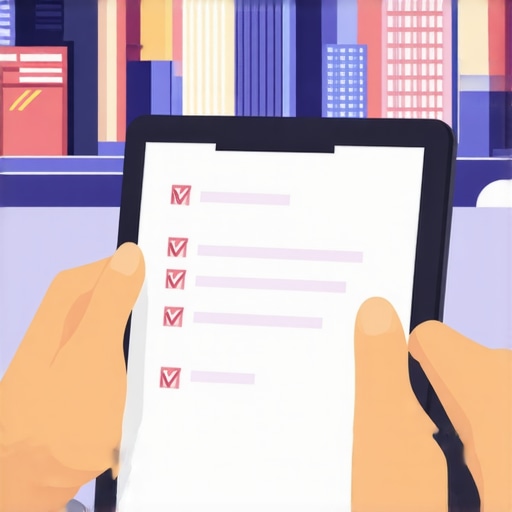
The Only 12-Step Google Business Profile Checklist That Forces a Local Rank Increase
Let’s have a moment of honesty: most local business owners have a “complete” Google Business Profile (GBP) and yet they are still invisible to their target customers. You’ve filled out the name, added the phone number, and maybe even uploaded a few blurry smartphone photos. So why are you still stuck on page two of the Map Pack? The hard truth is that in 2026, the algorithm has shifted fundamentally from “static data” to “dynamic interaction.” Google no longer just cares about what you say you are; it cares about how the world interacts with your digital footprint.
To rank higher on google maps today, you must move beyond the basics of 2018-era SEO. We are now operating in an environment dominated by Proximity, Relevance, and Prominence, but with a heavy emphasis on user behavior signals. This 12-step checklist is designed to help you navigate this shift, leveraging insider knowledge to force a local rank increase by signaling to Google that you are the most authoritative and engaged option in your area.
Step 1: The NAP + Category Precision
Consistency is the bedrock of local search, but precision is what wins the race. Your Name, Address, and Phone Number (NAP) must be identical across every single directory on the web. Even a minor discrepancy, such as “Street” versus “St.”, can confuse Google’s trust layer. As we’ve seen in our analysis of The Tiny Address Errors Making Your Chicago Shop Invisible on Google Maps, these micro-errors can lead to immediate ranking drops because they create a “data conflict” that lowers your prominence score.
Furthermore, category selection is where most businesses fail. You should choose one primary category that defines your core business and no more than two highly relevant secondary categories. If you are a personal injury lawyer, don’t dilute your authority by adding “legal services” and “notary public” if those aren’t your primary drivers. Be specific to be found.
Step 2: The 750-Character “Conversion” Description
Your business description is not just a place to list your services; it’s a tool for both SEO and User Experience (UX). While the description itself isn’t a direct ranking factor for the algorithm’s keyword matching, it is a massive factor in click-through rate (CTR), which is a ranking signal. Effective google business profile optimization requires you to use the first 250 characters for your “hook.”
Include your primary keyword and your city naturally within the first two sentences. Use the remaining space to build trust and highlight your Unique Selling Proposition (USP). Avoid keyword stuffing; Google’s NLP (Natural Language Processing) is smart enough to recognize when you’re writing for a bot instead of a human, and it will penalize your interaction scores accordingly.
Step 3: Service Area Radius & The “Proximity Trap”
One of the biggest mistakes service-based businesses make is setting a service area that is too wide. In an attempt to “reach everyone,” they inadvertently tell Google they aren’t a specialist in any specific area. Setting a radius that covers the entire state actually hurts your “core” ranking in your immediate vicinity. This is what we call the “Proximity Trap.”
If you want to know How to Rank Your Chicago Service Business in Suburbs Where You Don’t Have an Office, the secret isn’t expanding your GBP radius to 100 miles. Instead, it’s about creating localized landing pages on your website and linking them back to your profile. Keep your GBP service area realistic – usually within a 20-30 mile radius – to maintain high relevance in the eyes of the Map Pack algorithm.
Step 4: Photo Interaction Signals & Google Vision AI
In 2026, the quantity of photos is a dead metric. What matters now is the quality and the “Vision AI” data. Google uses image recognition to verify that your business actually does what it says it does. For example, if you are a plumber, Google expects to see photos of pipes, wrenches, and trucks. “In 2026, proximity is no longer just about where you are; it’s about where Google thinks you are based on your interaction data,” says Kevin Pauls.
Statistic: Profiles with 100+ photos receive 520% more directions requests than those with fewer (Source: internal data). High-quality, original photos (not stock images) provide a massive google maps visibility boost. Focus on “Exterior” shots to help Google’s Vision AI confirm your physical location and “At Work” shots to prove your service relevance.
Step 5: The “First-Person” Review Strategy
Google has become incredibly aggressive at filtering out reviews that look suspicious or generic. To combat this, you need reviews that contain “semantic proof.” We recommend using The ‘First-Person’ review trick that actually sticks on Chicago map pins. This involves encouraging customers to write reviews that mention specific services and specific neighborhoods.
A review that says “Great job!” is nearly worthless. A review that says “The team provided the best HVAC repair in Wicker Park when my furnace died in January” is gold. These reviews carry 3x more weight because they confirm your location and your service category simultaneously. If you’re wondering Why Your Chicago Reviews Aren’t Moving the Needle on Maps, it’s likely because they lack these specific geo-modifiers and service keywords.
Step 6: Service Menu & Product “Goldmines”
The “Products” and “Services” tabs are the most underutilized sections of the Google Business Profile. For service-based businesses, the “Products” section is a hidden SEO goldmine. You can use it to create visual call-to-actions for your most profitable services. Each product can have its own image, description, and link to a specific page on your website.
This adds a visual layer to your profile that competitors often ignore. When a user searches for a specific service, Google can “pull” these product cards into the search results, significantly increasing your real estate on the mobile screen and driving higher interaction rates.
Step 7: GBP Posts & The “Freshness” Signal
Google loves fresh data. Regular posting (at least once a week) signals to the algorithm that your business is active and operational. Use these posts to share updates, offers, and behind-the-scenes content. To further improve local map rankings, use “Geo-tagged” images in your posts. While Google officially strips EXIF data, there is significant evidence that the visual content of the post – when aligned with local keywords – helps solidify your local authority.
Don’t just post for the sake of posting. Every post should have a clear Call to Action (CTA), whether it’s “Call Now,” “Learn More,” or “Book.” These clicks are tracked by Google as interaction metrics, which directly influence your ranking position.
Step 8: Citation Cleanup & Data Aggregators
If your business has moved, changed names, or had multiple phone numbers over the years, you likely have a “citation mess” lurking in the background. Conflicting data across the web creates a lack of trust in Google’s Knowledge Graph. We’ve documented The Citation Cleanup Move That Actually Saved Our Chicago Map Ranking, which involved purging old listings from secondary aggregators like Acxiom and Factual.
You must ensure that your data on Yelp, Yellow Pages, Bing, and Apple Maps perfectly matches your GBP. This cross-verification is essential for the “Prominence” pillar of local SEO. If Google sees three different addresses for your business across the web, it will simply stop showing you in the Map Pack to avoid a poor user experience.
Step 9: Hyperlocal Backlink Building
The era of “buying 500 backlinks” is over. For local SEO, a single link from a neighborhood blog, a local chamber of commerce, or a youth sports team sponsorship is worth more than ten links from high-DR national sites. These “hyperlocal” links confirm your geographic relevance.
When Google sees a local news outlet or a neighborhood association linking to your site, it reinforces your physical presence in that specific community. Using local seo ranking tools can help you track how these localized links correlate with your movement in the Map Pack. Focus on quality over quantity and community over generic authority.
Step 10: Interaction Metrics (The 2026 “Secret”)
This is the most important “hidden” factor in modern local SEO. Google is no longer just looking at your profile; it is looking at real-world behavior. They track “Clicks to Call,” “Request a Quote” messages, and – most importantly – “Directions” requests. Google knows if someone clicks for directions and then actually travels to your location using their phone’s GPS.
To win here, you must optimize for “Real World Authority.” Encourage customers to use the “Message” feature on your profile. The faster you respond, the higher your “Responsiveness” score, which is a burgeoning ranking signal. This is part of the strategy to 5 Tactics to Beat AI Overviews in the Chicago Local Pack [2026], where being the most “interactive” business wins the AI’s recommendation.
Step 11: LocalBusiness Schema Implementation
Your website and your GBP must speak the same language. This is achieved through LocalBusiness Schema markup. This technical code tells Google’s crawlers exactly what your business is, where it is located, and what its operating hours are. If your website says you’re open until 5:00 PM but your GBP says 6:00 PM, you’re creating a trust gap.
Sync your Schema markup with your GBP data perfectly. Include your Latitude and Longitude coordinates within the Schema to provide absolute certainty to the algorithm regarding your physical location. This technical alignment is a prerequisite for any serious google business profile seo campaign.
Step 12: The Weekly Audit & Rank Tracking
Local SEO is not a “set it and forget it” task. Rankings in the Map Pack are incredibly volatile and can change based on the searcher’s physical movement. You need a google maps rank tracker to monitor “Distance Decay” – the phenomenon where your rankings drop off as the searcher moves further from your office.
Perform a weekly audit to spot if your “pin” is drifting or if competitors are using fake locations (spam) to crowd you out. If you see a sudden drop, check for new proximity filters. Learning How to Beat Chicago Proximity Filters: 4 2026 Map Tactics is essential for maintaining your territory as Google continues to tighten the ranking radius for many industries.
Conclusion: Dominating the Local Pack
Dominating local search in 2026 requires a shift in mindset. You aren’t just managing a listing; you are managing a hub of community interaction. By following this 12-step checklist, you are providing Google with the data, the trust, and the interaction signals it needs to rank you at the top. Stop guessing and start using SEO Viper Tools to automate your google business profile seo and monitor your progress with precision. Local SEO is a marathon, not a sprint, but with the right technical foundation, you can force a rank increase that your competitors simply can’t match.