Why Your Map Ranking Tracker is Lying About Your Business Visibility in River North
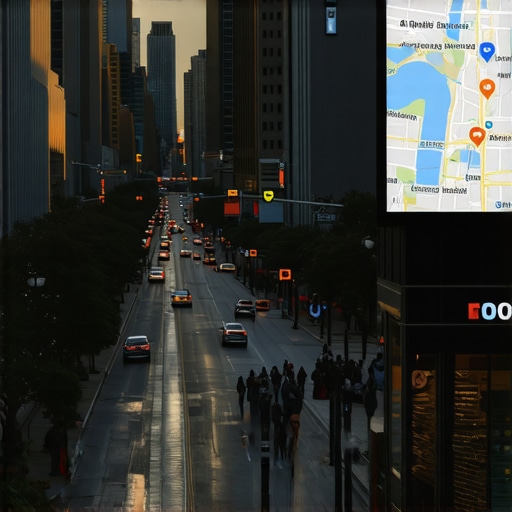
You are sitting in your office on West Hubbard Street in the heart of River North. You pull up your expensive SEO dashboard, and there it is: a bright green “#1” for your primary keyword. You feel a surge of confidence. You’re dominating the Chicago market. But then, you walk three blocks south toward the Merchandise Mart for a lunch meeting. You pull out your phone, search for your own service, and your business is nowhere to be found. You scroll past three competitors you’ve never even heard of before hitting the “More Businesses” button.
What happened? Did your rankings drop in the twenty minutes it took to walk a few blocks? No. The reality is that your google maps rank tracker has been lying to you. Or, more accurately, it’s been giving you a single data point in a city that demands a thousand. As a Technical SEO expert who has spent years dissecting google business profile seo, I’ve seen this “Proximity Paradox” destroy the marketing budgets of countless Chicago firms. In a dense, high-competition neighborhood like River North, a single ranking number is not just useless – it’s dangerous.
The Myth of the “Single Ranking” Number
In the world of traditional organic SEO, you might rank #4 for a keyword nationally, and that position remains relatively stable whether the searcher is in New York or Los Angeles. Local SEO does not work this way. There is no such thing as a “rank” in the local map pack; there is only a “position relative to the searcher’s coordinates.”
Google’s algorithm for the local map pack is built on three pillars: Proximity, Relevance, and Prominence. While Relevance (what you do) and Prominence (how famous you are) are somewhat stable, Proximity is hyper-volatile. In a neighborhood like River North, where every square inch is packed with businesses, Google’s “ranking bubble” can be as small as a few hundred feet.
If you are using standard local seo software that only tracks your position from a single zip code center or a static office location, you are viewing your business through a pinhole. You might be winning at the corner of Grand and Wells, but you could be invisible at the corner of Ontario and Orleans. Relying on a single “average” rank hides the “red zones” where your competitors are stealing your leads. To truly rank google business profile assets effectively, you must move beyond the myth of the single number and embrace the reality of the geogrid.
Why River North is a “Local SEO War Zone”
River North (specifically the 60654 and 60610 zip codes) represents one of the most challenging local search environments in the United States. It isn’t just the competition; it’s the geography. We are dealing with extreme “Competition Density.” When you have forty law firms or twenty med spas within a half-mile radius, Google’s algorithm has to find a way to filter the results. The easiest filter is distance.
This creates what I call the “Proximity Trap.” According to data from ReviewInc, proximity shifts are the primary reason grid reports look inconsistent in urban centers. In River North, a ranking can fluctuate by up to five positions within just 500 feet. This is compounded by the “canyon effect” of our skyscrapers. High-rise buildings cause GPS “drift,” meaning Google sometimes struggles to pin a user’s exact location, leading to even more erratic map pack results. If you aren’t accounting for this, you are likely suffering from The ‘Distance Decay’ Error That Shrank Your Chicago Map Radius Overnight.
Furthermore, Google’s “Possum” filter is highly active here. If two businesses in the same category share a building or are located extremely close to one another, Google may filter one out to provide “variety” to the user. If your tracker says you’re #1, it might only be because it’s not triggering that proximity filter from the specific point it’s testing.
The “Grid” vs. The “List”: How to Actually Measure Visibility
If a single-point tracker is a pinhole, a geogrid is a satellite view. To understand your true google business profile seo health, you need a google maps rank tracker that utilizes a multi-point grid system (e.g., a 13×13 or 15×15 grid). This tool simulates a user searching from hundreds of different coordinates across River North and the surrounding neighborhoods like the Gold Coast and the Loop.
When you look at a heat map, you stop seeing a “rank” and start seeing a “territory.”
- The Green Zone: Areas where you are in the top 3. This is your primary “money” zone.
- The Yellow Zone: Areas where you are ranked 4-10. You are “near-miss” territory. A few more local citations or a better review velocity could push you into the top 3.
- The Red Zone: Areas where you are 10+. In River North, being #10 is the same as being invisible.
If your pin is bright green at your office but turns red the moment you cross the Chicago River, you don’t have a “ranking” problem – you have a “relevance” or “prominence” problem. You haven’t convinced Google that you are the best choice for someone standing 1,000 feet away. This is where The Specific GMB Tools Chicago Agencies Use to Fix Broken Map Clicks become essential for diagnosing whether your issue is technical or content-based.
3 Reasons Your Tracker Says You’re #1 (When You’re Actually #10)
Why is there such a massive discrepancy between your software and the real world? It usually boils down to three technical biases that most local seo tools fail to account for.
1. The User Proximity Filter
Google’s primary goal is “relevance.” If you are searching for your own business while sitting *inside* your business, Google knows. It uses your IP address, your Wi-Fi network, and your device’s GPS. Of course, it’s going to show you your own listing – you are the most “proximate” result possible. Many low-end gmb seo tools fail to mask their search origin effectively, leading to “false positives” where the software thinks you are ranking well because it’s “standing” too close to your front door.
2. Search History Bias
Your browser is “trained.” If you frequently manage your Google Business Profile, visit your own website, or search for your brand name, Google’s personalized search algorithm will prioritize your business in the map pack. Even if you use “Incognito” mode, Google can often still identify your device or network. This creates a “vanity metric” that makes business owners feel good while their actual reach is shrinking. You might find that Why Your Chicago Storefront Ranking Drops the Moment You Leave the Office is due to this exact lack of objective data.
3. The “Nighttime Vanishing” Act
Rankings are not static throughout the 24-hour cycle. Google often demotes businesses that are currently “Closed” in favor of those that are “Open” to provide a better user experience. If your local map pack seo tool runs its scans at 2:00 AM, but your competitors are 24-hour services or have different listed hours, your data will be skewed. In a neighborhood like River North, where nightlife and late-night services are common, “Open Now” is a massive ranking signal that many trackers ignore.
2026 Strategy: Breaking Out of the River North Proximity Bubble
As we move into 2026, the “Proximity Paradox” is only getting tighter. Google’s “agentic” AI is becoming better at determining the true “Prominence” of a business. To break out of a small proximity bubble in Chicago, you need a google maps optimization service strategy that focuses on more than just keywords.
Hyperlocal Content: You cannot just rank for “Chicago.” You need to rank for “River North,” “Near North Side,” and even specific landmarks. Mentioning your proximity to the Ward (A. Montgomery Ward) Park or your distance from the Merchandise Mart in your business description and website content helps build “geographic relevance.”
The “Highly Cited” Label: A major 2026 trend is the rise of AI Overviews in the local pack. Google is now prioritizing businesses that are “highly cited” across the web. This doesn’t just mean a Yelp profile; it means mentions in local Chicago news, blogs, and neighborhood directories. According to Search Engine Land, “Prominence” is the only way to override a “Proximity” deficit. If you are prominent enough, Google will show your business to a searcher in River North even if you are technically located in West Loop.
First-Person Reviews: Google’s AI is now scanning reviews for “experiential proof.” Reviews that say “I visited their office on LaSalle St” carry more weight for local ranking than generic “Great service!” comments. To see how to implement these changes, check out How to Beat Chicago Proximity Filters: 4 2026 Map Tactics.
Conclusion: Stop Guessing, Start Mapping
If you are a business owner in River North, you cannot afford to rely on vanity metrics. A single green “#1” on a report is a lie if it doesn’t translate to foot traffic from three blocks away. The density of Chicago’s 60654 and 60610 zip codes requires a sophisticated, grid-based approach to google business profile seo.
Stop guessing about your visibility. Use a high-precision google maps rank tracker like SEO Viper Tools to see the truth about your reach. Once you see the “red zones” in your neighborhood, you can begin the technical work of expanding your radius. If you’re ready to stop being invisible to 70% of your neighborhood, contact me, Purvish Patel, MBA, for a comprehensive technical audit of your local search presence. Let’s turn those red dots green.